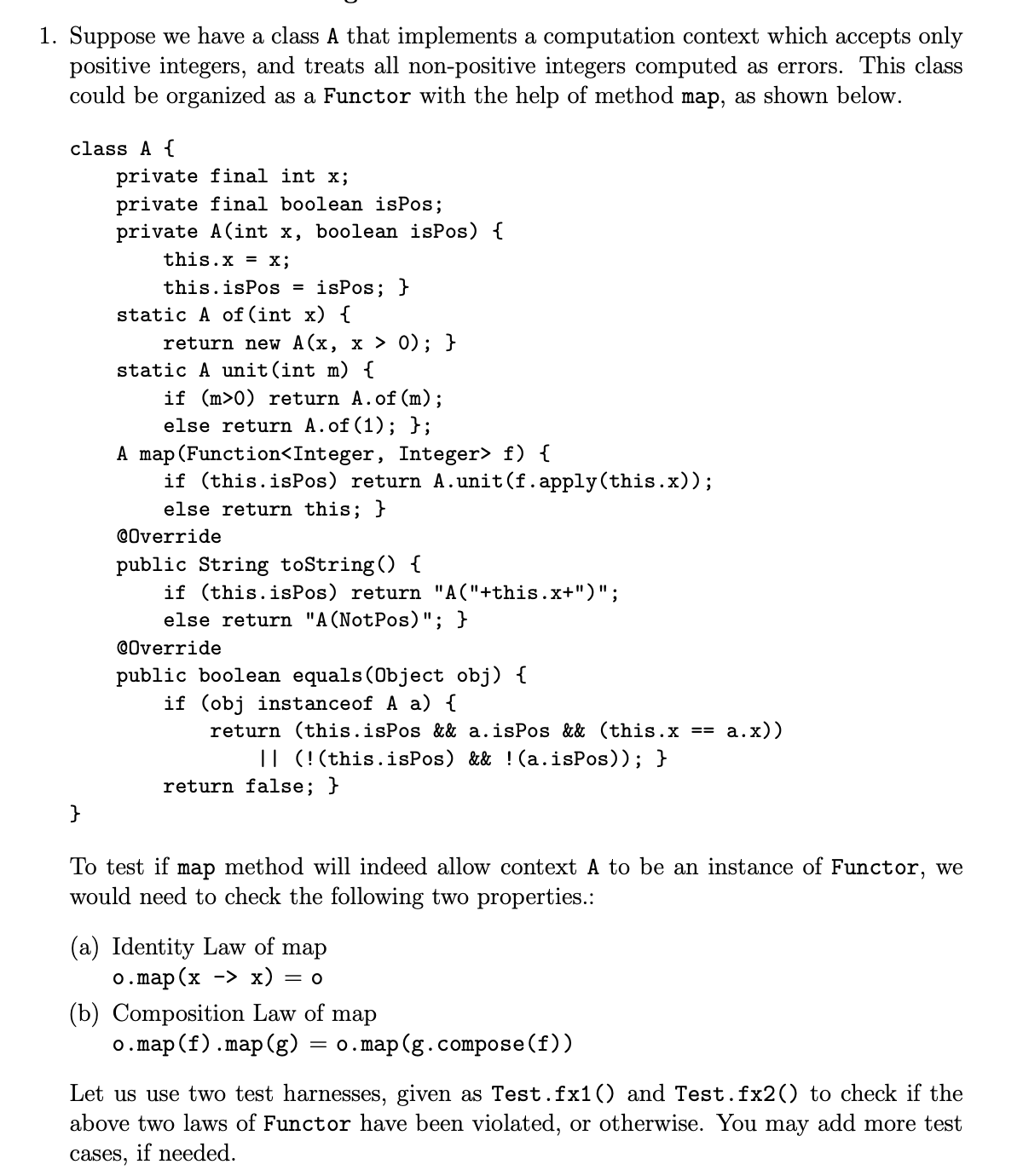
static Pair<Boolean,String> IdentityMap(A a) {
	A lhs = a.map(x -> x);
	A rhs = a;
	boolean flag = lhs.equals(rhs);

static Pair<Boolean,String> ComposeMap(A a, Function<Integer,Integer> f, Function<Integer,Integer> g) {
	A lhs = a.map(f).map(g);
	A rhs = a.map(x -> g.compose(f).apply(x));
	boolean flag = lhs.equals(rhs);
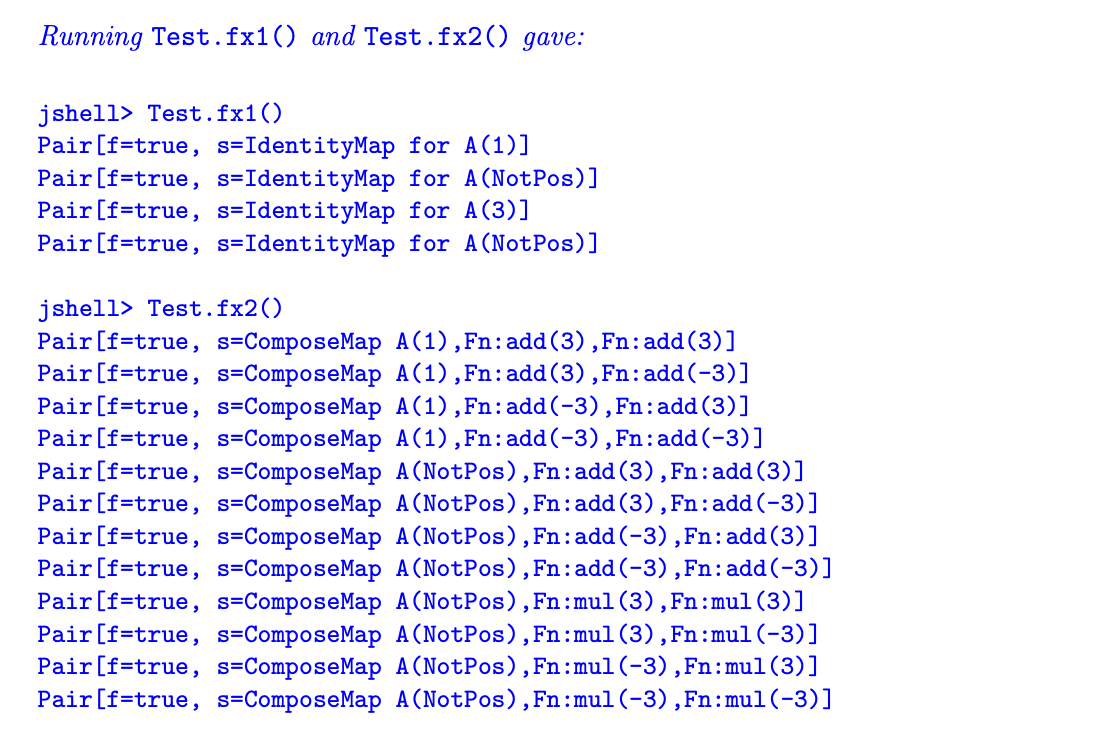
When isPos is false, map() returns this without even touching the function. So you return the same NotPos.
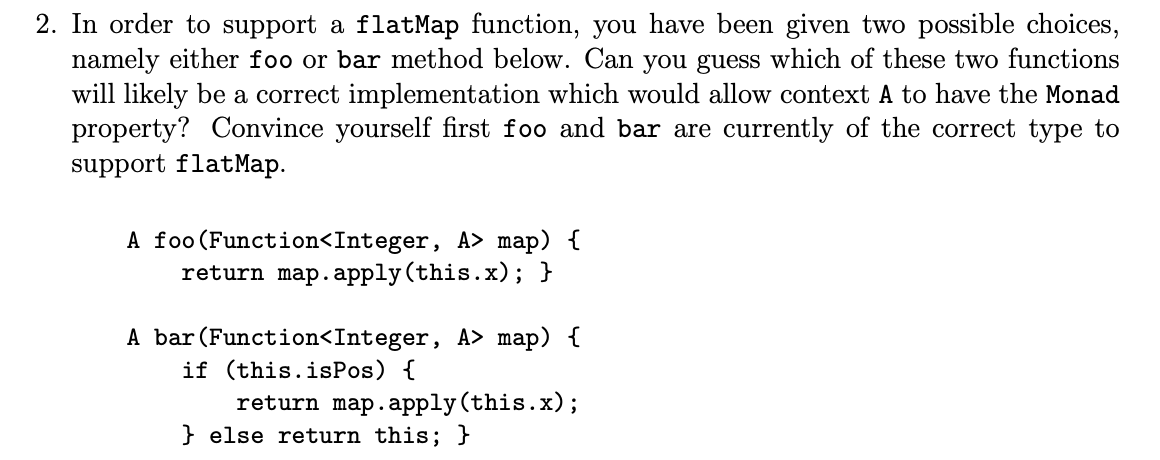

flatMap takes a value wrapped in context A, applies a function that returns another A, and gives back an A.
bar only applies the function if isPos. If NotPos, short-circuits and returns this — propagates the error!
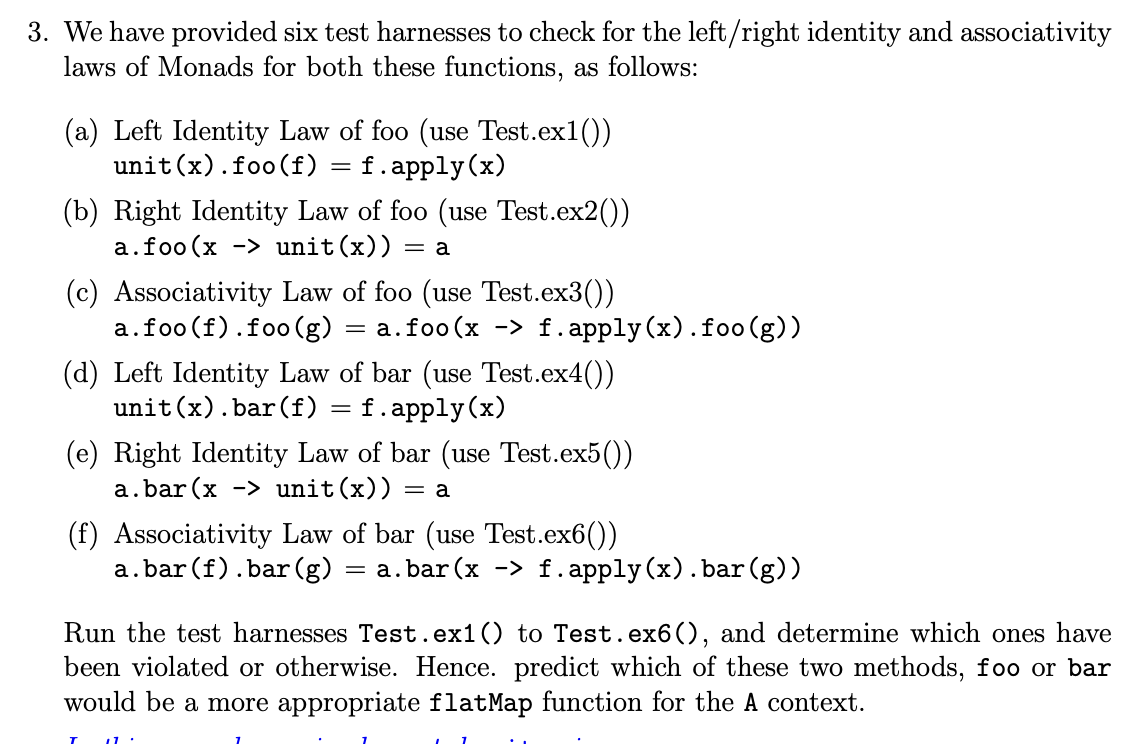
Both foo and bar satisfy all three Monads law mathematically. But passing the laws doesn’t mean both are equally correct — they differ semantically:
foo — error can be “revived” by the function. NotPos goes in, but if f returns a positive value, you get a valid A back. Error is silently discarded. bar — error is sticky. NotPos goes in, NotPos comes out no matter what f does. Error propagates faithfully.
The Monad laws are a necessary but not sufficient condition for correctness. They tell you the implementation is consistent, but not whether it makes sense for your context. For the context A, errors should propogate.