Research Approaches
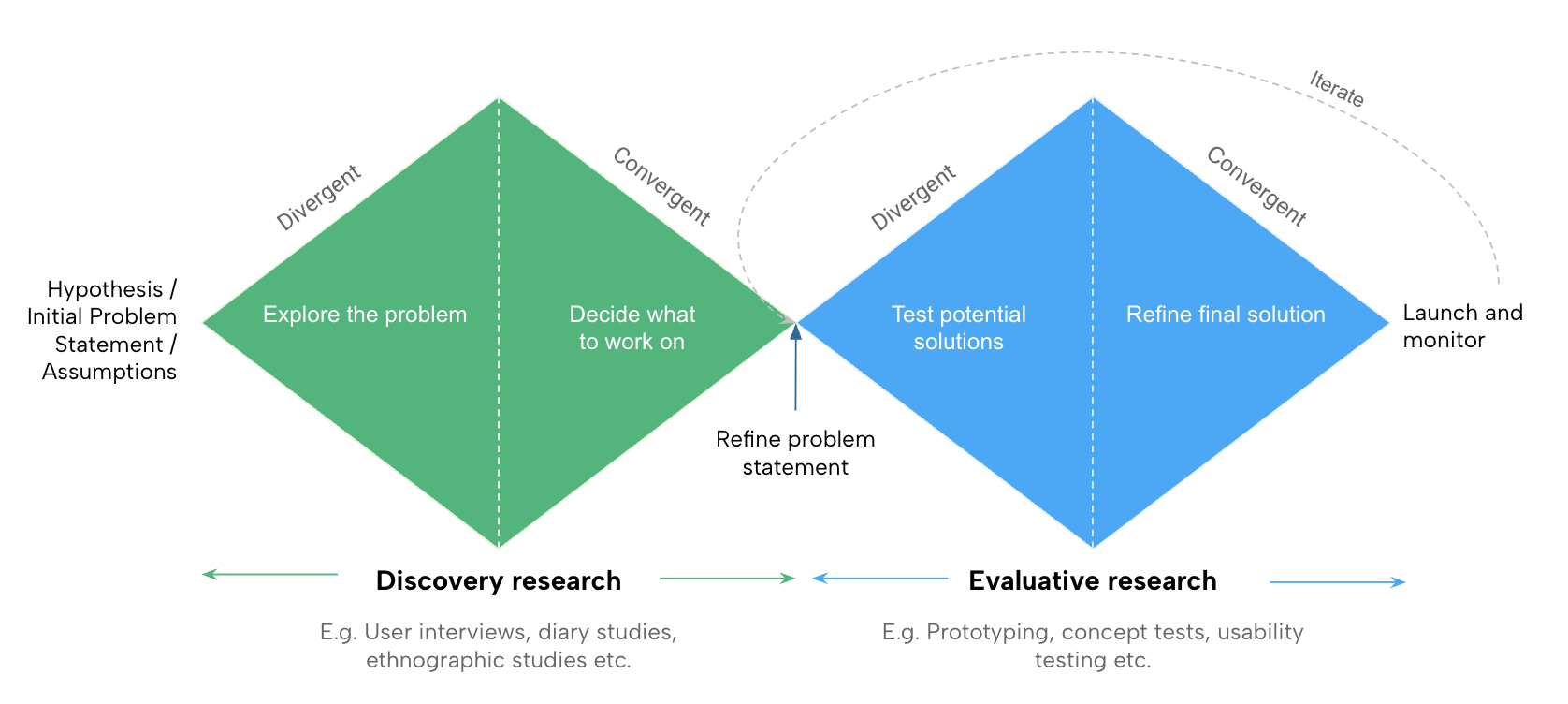
- Discovery Research
- Evaluative Research
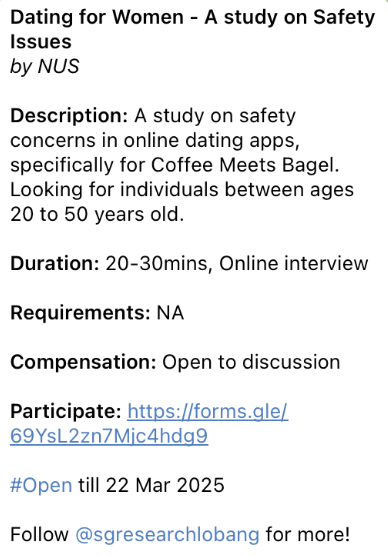
Finding interviews
Find people who have experienced it.
- Asking around your network
- Asking around family & friends
- Posted on SG Surveys Telegram Channels
Funnel: Broad ⇒ Narrow
Get to know the user and what shapes their motivations/behaviours.
- “We are conducting an investigation” ⇒ “this is a conversation”
- Record the session to reduce distractions
- Loop back to these details afterwards
TEDW Questions
Avoid YES/NO questions.
- Tell me about …
- Talk me through …
- Explain how
- Describe
- Walk me through
Observe the steps
I noticed you … Show me how you would … Walk me through how … What’s the first thing you do? Why do you start there?
Give Tasks
After giving them a task, keep quiet.
Silence lets them think and doesn’t give them something to agree with.
Watch them act, and then ask ask why.
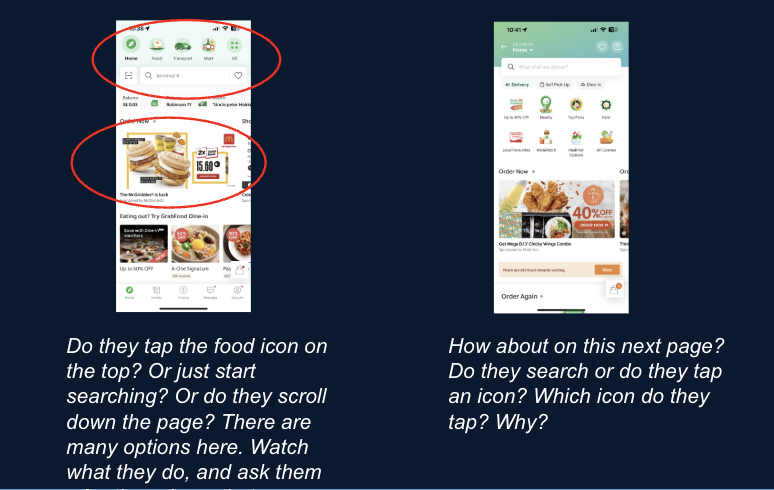
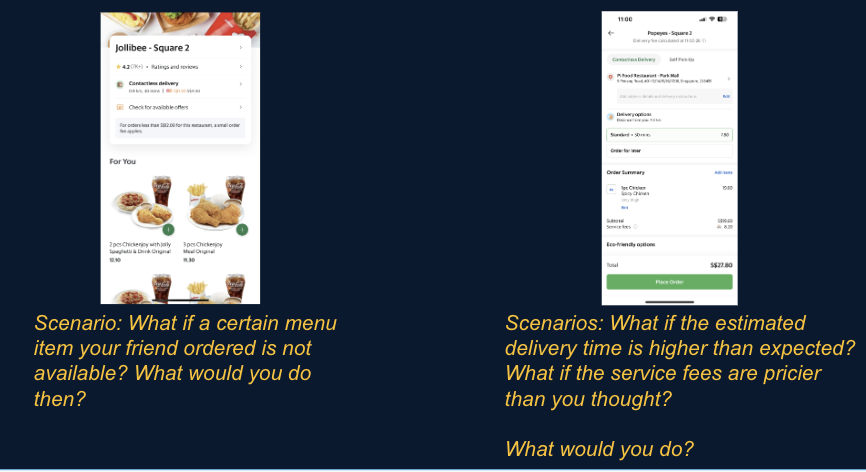
Give them scenarios.
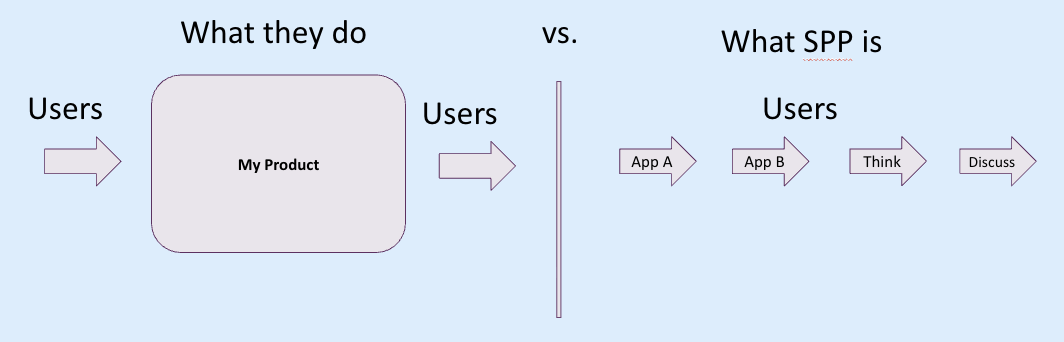
SPP Model
It’s not about how users react to your prototype.
It’s how they do the current task without your app.
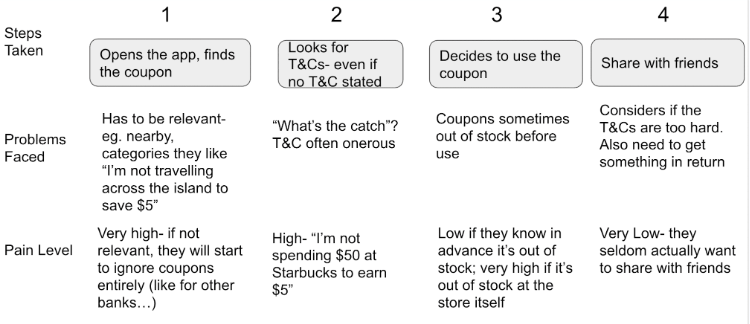
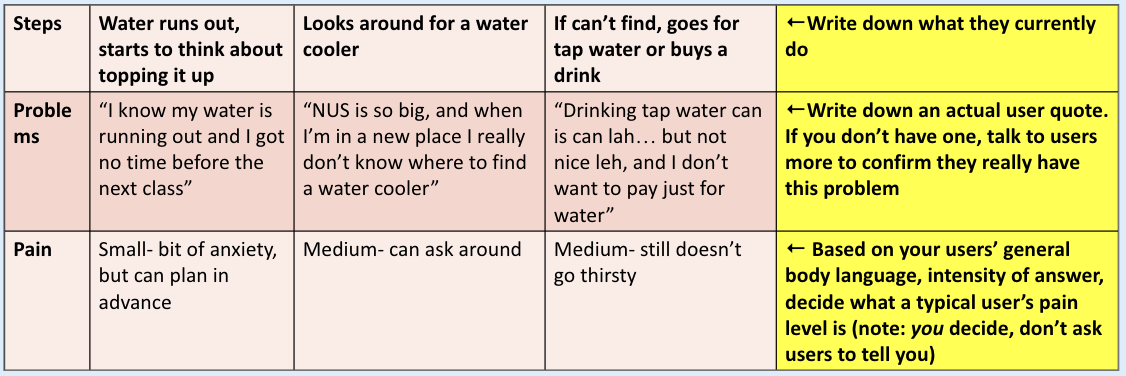
Examples
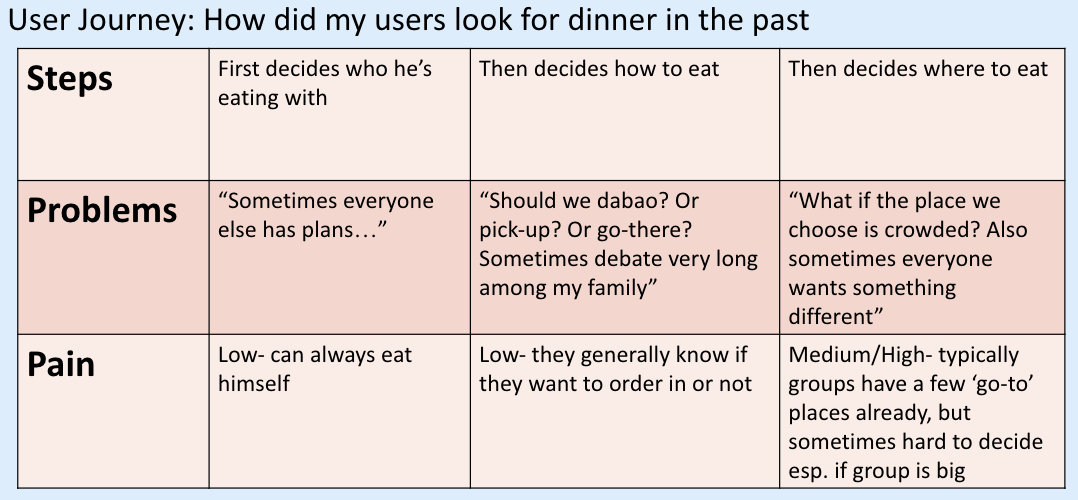
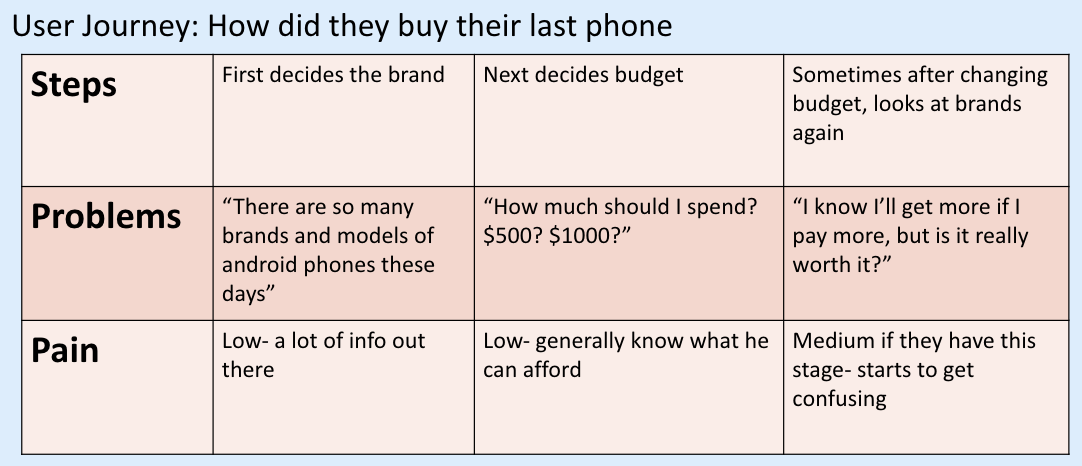
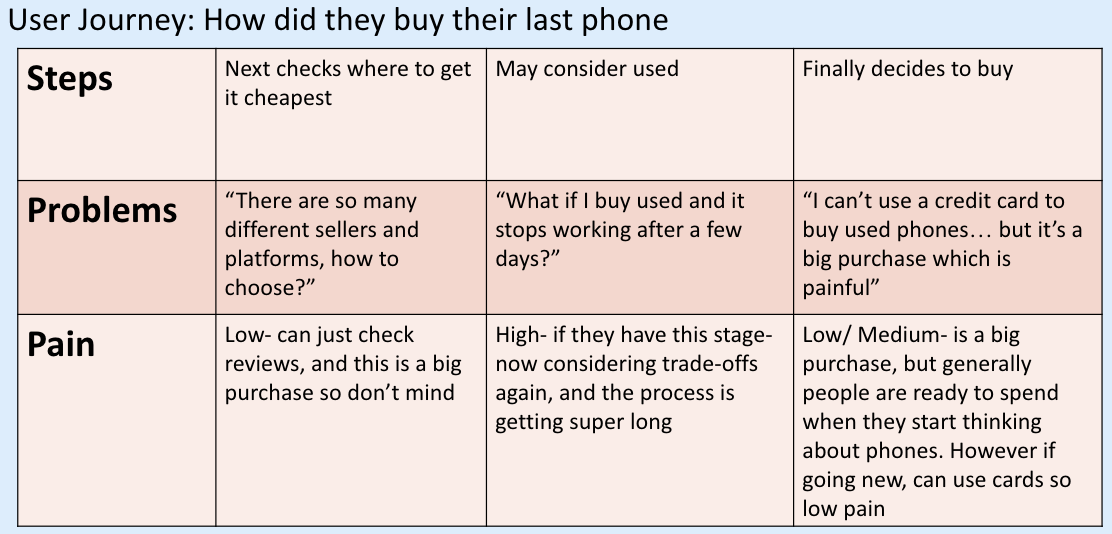
Failing with SPP
What if the user doesn’t like your solution? Well, does their problem disappear? SPP helps you to brainstorm other solutions to the same problem.
Your SSP should be a bigger picture
PMs tend to focus on quantitative app and behavioural data.
PMs work too long in the industry and are laser-focussed.
PMs have a lack of experience interviewing users.
Going one step further
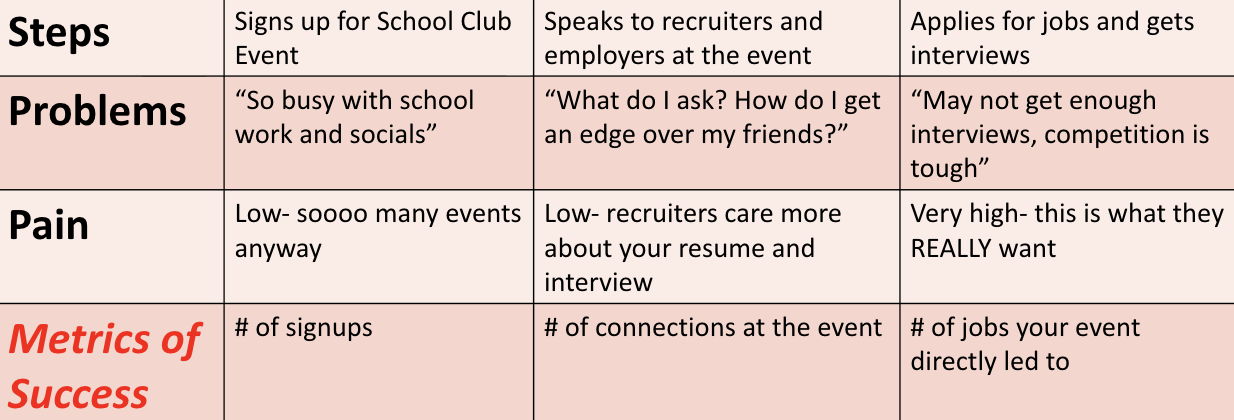
Designing the product
Users are not going to change their behaviour
Trying to create features to change behaviour will not work. Unless your product is 10x better. Companies don’t pay PMs to come up with ideas with a 99.9% failure rate.
Users care if you solve a pain point
If the problem wasn’t painful, they are not interested. They don’t really care if it’s better, faster, smarter.